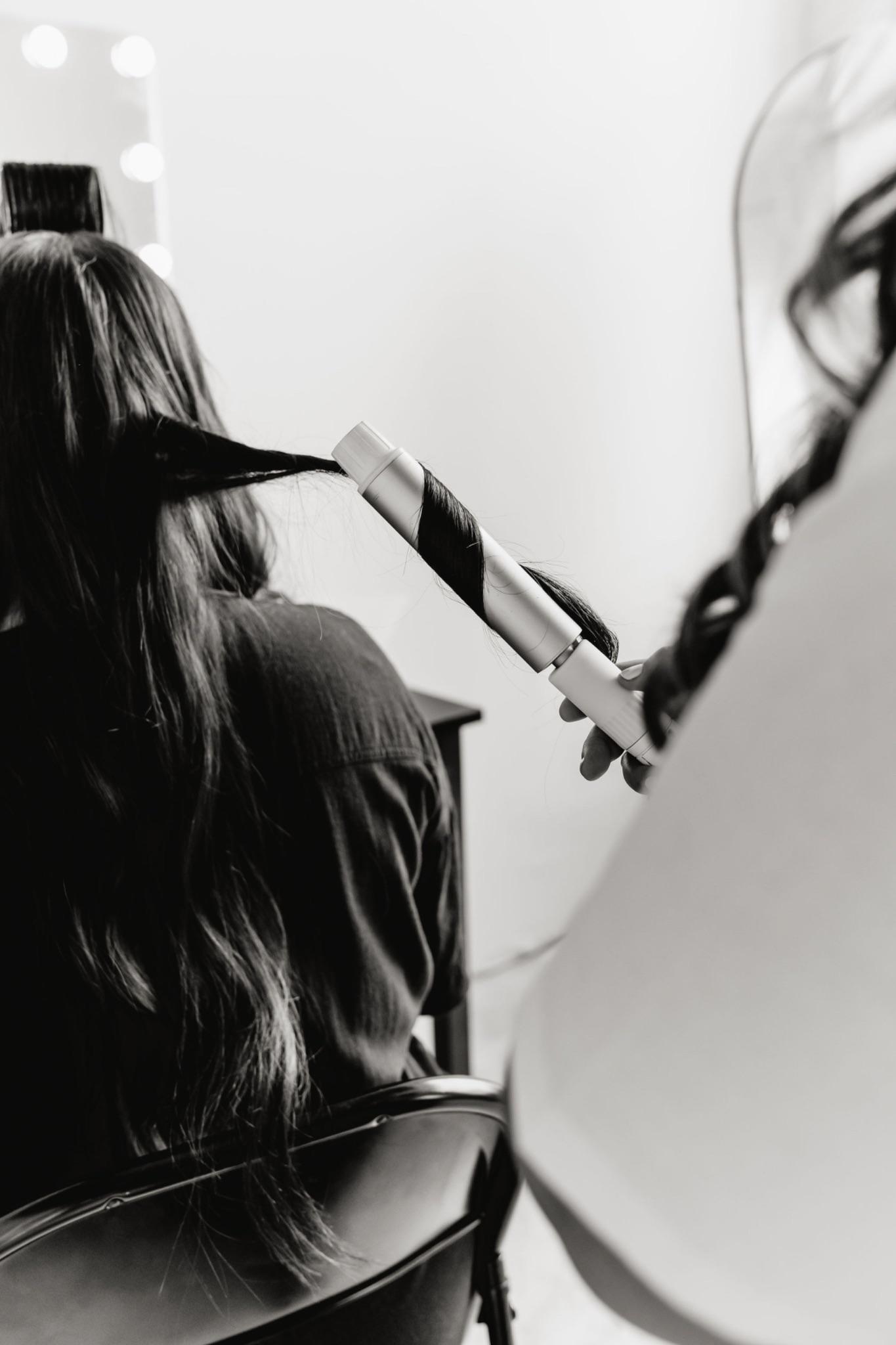
Choosing a wedding hair stylist involves more than selecting an updo photograph. Your hair needs to work with the neckline, veil, weather, photography schedule, and the way you want to feel throughout the day. At Bianchi's Salon & Spa, begin by separating an individual salon appointment from a full bridal-party or on-location request. That distinction makes it easier to discuss the right service, realistic timing, and the details that need confirmation. Explore our bridal & special event hair services for the current menus.
At a glance
- Individual formal styling: about 45–90 minutes; wedding-party timing is quoted separately.
- Event styling is a one-day service; arrange a trial separately for a major occasion.
- Birmingham menu: Formal Style (Updo/Downdo): $100+ Starting prices are not a fixed total.
- Locations with this menu category: Birmingham, Royal Oak, Troy, Clinton Township. Full wedding-day bookings go through Black Tie Beauty.
How do you turn Your Inspiration Into a Wearable Design?
Bring a small set of references and identify the feature you like in each. You might prefer the low placement of one bun, the softness around the face in another image, and the clean crown of a third.
Also bring a photograph of your outfit's neckline and any jewelry that could catch on loose hair.
Your natural density and length affect the result. A large textured bun photographed on very long hair may require a different construction on a shoulder-length cut. Discuss alternatives before assuming added hair is necessary. If extensions are being considered, Bianchi's lists Hair Extensions as Consult; do not treat them as an included bridal accessory. The goal is a design you recognize as yourself, with enough structure for your plans and enough comfort to wear through photographs, dinner, and dancing.
How do you use a Trial to Test Decisions, Not Just Appearance?
Discuss a trial well before the wedding, and confirm its availability, scope, duration, and price directly. A trial is most useful when the main design questions are already defined.
Bring the veil or headpiece if available, along with the reference images and any concerns about tension, slipping, or hair around your face.
Ask to view the style from the front, sides, and back. Photograph it in ordinary light, then pay attention to how it feels over the following hours. Note whether a face-framing piece bothers your eyes, whether a comb presses into the scalp, or whether the crown feels too high. Those observations are more actionable than deciding only that the style is too formal. Confirm which decisions and accessory placements should be recorded for the wedding appointment, without assuming unlimited style changes fit into one trial.
How do you build Support Around the Veil and Headpiece?
A veil comb needs an appropriate anchor, and its position changes how the hairstyle reads. A veil placed above a bun can create a different profile from one secured below it.
Tell the stylist whether the veil will remain in place for the reception and who may remove it after the ceremony.
Bring the actual accessory rather than relying solely on a photograph. Weight, comb length, and attachment points all influence placement. Decorative pins also need to be secure without making the scalp uncomfortable. For fresh flowers, coordinate practical details with your florist, including the size and preparation of the stems. Ask for a removal demonstration if someone else will take the veil out. Pulling at the comb without understanding the anchor can disturb an otherwise stable hairstyle, especially when the veil and bun use nearby support.
How do you choose Structure for the Venue and Season?
Loose waves, half-up styles, and fully pinned shapes respond differently to movement and moisture. For an outdoor ceremony or a long period of photographs, discuss what your texture usually does in humidity and wind.
An updo may keep hair away from the face, but no style can be guaranteed unaffected by weather.
Support comes from preparation, sectioning, anchoring, and an appropriate finish rather than simply applying more spray. A soft-looking style can still have an organized internal structure. Conversely, a sleek photograph may require more surface control than you enjoy wearing. Describe your comfort limits, including whether you dislike backcombing or tension near the temples. If the forecast changes, a pre-discussed alternative is more practical than redesigning the entire look at departure time. Decide which details are essential and which can adapt to the conditions.
How do you work Backward From Photography and Departure?
Hair should be scheduled around the time you need to be ready for dressing and photographs, not just the ceremony. Share the first-look time, travel between venues, makeup sequence, and when the photographer expects detail images.
Include a buffer so a delayed arrival does not immediately compress the final styling.
Ask the stylist for a service-specific duration rather than assuming every bridal style takes the same hour. Hair preparation, density, accessory placement, and the chosen design all affect timing. Confirm shampoo and arrival instructions in advance; freshly washed hair and day-old hair are not interchangeable requirements for every look. Wear something that opens at the front when possible. For a salon visit in downtown Birmingham or Royal Oak, account for metered parking and walking time. Also check operating days rather than assuming a Sunday salon appointment is available.
How do you distinguish Salon Bridal Pricing From Group Services?
Bianchi's lists Bridal Updo at $125+ at Troy, Royal Oak, and Clinton Township only. Birmingham does not list that bridal service.
Formal Style (Updo/Downdo) starts at $100+ across all four locations, but that menu entry should not be used to assume bridal availability or substitute a price for a wedding request.
Full bridal parties and on-location services should be directed through /black-tie-beauty. Use that route to discuss the number of people, getting-ready address, readiness deadline, and requested services. Do not assume salon starting prices establish an on-location package, travel charge, staffing arrangement, or minimum booking. Trial costs, any additional services, and applicable booking terms also need direct confirmation. An individual bride seeking a salon appointment should still explain the wedding context so the service and required time can be identified accurately.
How do you make a Small, Specific Wedding-Day Care Plan?
Before leaving the styling chair, ask which areas should not be disturbed and how to handle the veil.
If you are carrying spare pins, have the stylist explain where a replacement could help rather than pushing pins randomly into the structure. A compact emergency kit should be appropriate to the finished style, not an invitation to rebuild it during the reception.
Avoid major last-minute experiments with color, a new fringe, or unfamiliar home treatments. Discuss those changes early enough to assess how they affect the design. After the event, remove accessories and pins slowly, locating the anchors before brushing. Detangle gently rather than pulling through backcombed sections. The most useful wedding-hair plan is one you understand: the chosen shape, accessory placement, preparation instructions, realistic schedule, confirmed service scope, and a practical response if weather or timing changes.
Salon appointment planning
Review bridal & special event hair at our Birmingham salon for local prices, hours and parking. Compare the Metro Detroit bridal & special event hair menu before choosing a location.
Continue reading: Special Event Hair: Choosing a Style and Planning Your Salon Timeline.
Metro Detroit salon locations
Bianchi's Salon of Birmingham
View Location Details →Bianchi's Salon of Royal Oak
View Location Details →Bianchi's Salon of Troy
View Location Details →Bianchi's Salon & Spa of Clinton Township
View Location Details →Hair and beauty services
Your next salon visit
Choose the location and service that fit your appointment and maintenance plans.